September 2, 2026
5 minute read
Every startup hits the same crossroads: the kitchen table has stopped working, but a traditional office lease feels like signing your life away before you’ve even found product-market fit. Somewhere between those two extremes sits an option built almost perfectly for the way startups actually grow—the private office inside a coworking space.
But “private office” can mean a lot of things, and if you’re evaluating one for your team, the real question is: what do you actually get for the price? This guide breaks down exactly what a coworking private office includes, so you can weigh the value with confidence and skip the surprises.
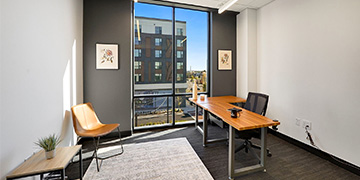
At its foundation, a private office in a coworking space is a fully enclosed, lockable room that belongs to your team—not a desk in an open room, not a rotating hot seat. You get four walls, a door that shuts, and a space where you can take calls, host meetings, and concentrate without the distractions of a shared floor.
The word that matters most for startups is ready. A good private office is move-in ready from the moment you sign:
Fully furnished. Desks, chairs, and the basics are already there. No trips to buy furniture, no assembly weekend, no capital tied up in things that depreciate.
Serviced and maintained. Cleaning is handled. Utilities—electricity, heating and cooling, internet—are included in one predictable payment. You skip the build-out entirely and start working immediately.
Secure and private. A lockable space keeps your equipment, documents, and confidential conversations protected—which matters as much for a two-person founding team as it does for a growing one.
For a startup, this is the difference between spending your first week building your business and spending it building IKEA furniture.
Here’s where a coworking private office pulls ahead of just renting a room somewhere. Your private office typically comes bundled with the full range of coworking space amenities—the shared infrastructure that would cost a fortune to assemble on your own.
Business-class Wi-Fi. Fast, secure, reliable internet is the utility a startup can’t afford to have flaking out mid-demo. It’s built in.
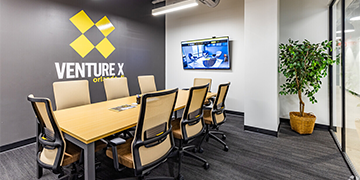
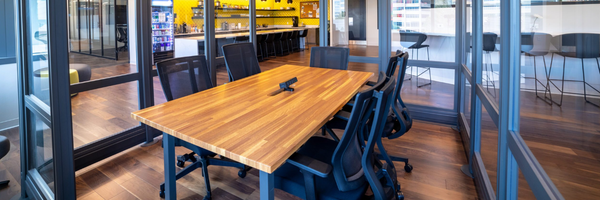
Professional meeting rooms. Access to fully equipped, tech-ready meeting rooms—with screens, whiteboards, and conferencing tools—means you can pitch investors, run interviews, and host clients in a polished setting instead of crowding around a laptop.
Staffed reception. On-site reception during business hours greets your guests, supports your day, and lends your young company a level of professionalism that’s hard to fake.
Kitchen and lounge access. Coffee, refreshments, and comfortable common areas are part of the package—the small comforts that keep a team going.
Printing and business services. The everyday administrative essentials are there when you need them, without a separate vendor or subscription.
A professional business address. Your private office usually comes with a real business address and mail handling—which keeps your home address off public listings and gives your startup instant credibility with clients, partners, and investors.
24/7 access. Startups don’t work nine to five. Private office members typically get around-the-clock key access, so the space works on your schedule—late nights and weekends included.
The point is this: the sticker price of a private office isn’t just for the room. It’s for the room plus an entire professional operation you’d otherwise have to build, staff, and pay for piece by piece.
The single most important inclusion for a startup isn’t a physical amenity at all—it’s flexibility.
Traditional office leases ask you to predict the future. How many people will you have in a year? How much space? What if you raise—or don’t? Signing a multi-year lease means betting on answers you can’t possibly know yet.
A flexible workspace is built around a different assumption: that your needs will change, probably faster than you expect. Private office plans typically range from month-to-month to longer-term agreements, so you can right-size as you go. Hire three people this quarter? Add desks or a bigger office. Need to tighten up? Scale back without penalty.
And when you outgrow a single room, you don’t have to move buildings and start over. Many locations offer multi-desk team offices and enterprise suites—up to a full floor—so your space can grow from a two-person startup into a full team without ever losing your professional home base. That’s the kind of runway a traditional landlord simply can’t offer.
One inclusion startups consistently underestimate: the people around you.
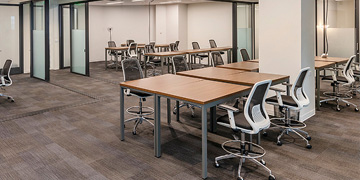
A private office in a coworking space means you get privacy and proximity—your own quiet room, with a dynamic community of professionals, entrepreneurs, and teams just outside the door. That community turns into introductions, referrals, advice from someone who’s solved the problem you’re stuck on, and the simple energy of working near other people building things.
For founders who’ve felt the isolation of working from home, this is often the amenity that matters most—and it doesn’t show up on any pricing sheet.
When you’re comparing a coworking private office against the alternatives, add up what’s actually included:
Against working from home, you’re buying focus, privacy, credibility, and a professional place to meet clients—things a spare bedroom can’t provide.
Against a traditional lease, you’re getting furniture, utilities, internet, cleaning, reception, meeting rooms, and amenities bundled into one predictable payment, with none of the build-out cost or long-term risk.
Against budget coworking, you’re gaining a private, secure, professional space instead of a noisy shared table—without giving up the community and amenities.
The math tends to favor the private office precisely because so much is included. What looks like a single line item is really a whole business operation—space, infrastructure, services, and flexibility—rolled into one.
For a startup, a coworking private office includes far more than a room with a door. It’s a furnished, serviced, move-in-ready space wrapped in professional amenities, real business services, genuine flexibility, and a built-in community—all without the cost and commitment of a traditional lease. It lets you look established on day one and stay nimble as you grow. For a young company trying to do both at once, that combination is hard to beat.
Ready to see what’s included? Find a Venture X location near you and book a tour.